2026.06.09(화) 19:26
 교육타임즈 지면신문









|
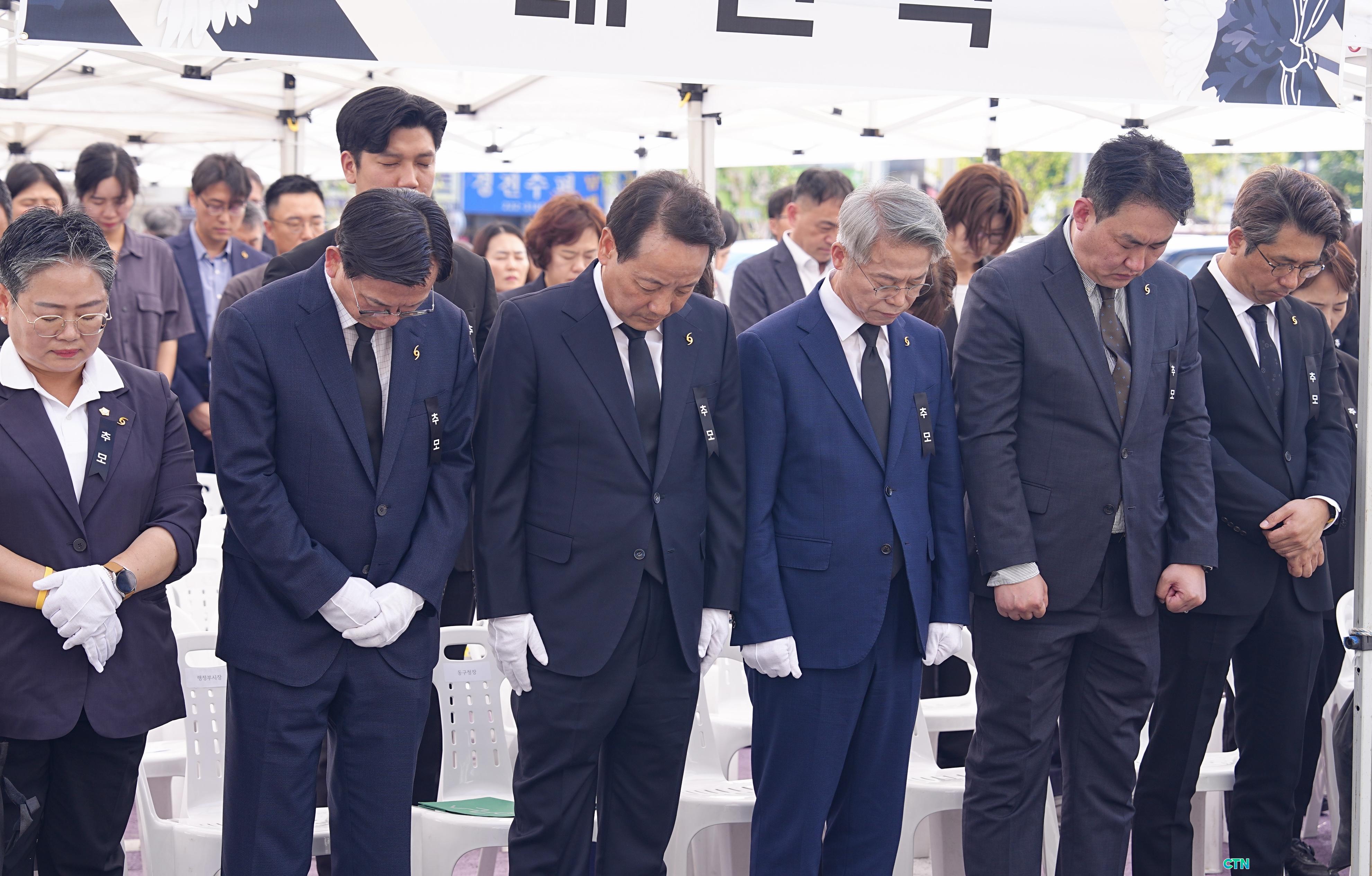
참사 발생 시각에 맞춘 묵념과 추모 공연 등 지자체가 매년 정례적으로 추모 행사를 주관하고 고위 관계자들이 참석해 재발 방지를 확약하는 것은 공공의 책임성을 환기하고 유가족들의 사회적 치유를 돕는다는 점에서 소홀히 할 수 없는 의례적 조치다. 그러나 이러한 추모 정치가 매년 반복되는 행정적 수사에 그치지 않고 현장의 실질적인 변화를 견인하기 위해서는, 여전히 하도급 구조의 사각지대 속에서 안전불감증을 노출하고 있는 건설 현장의 고질적인 병폐를 뿌리 뽑을 제도적 인프라가 결합되어야 한다는 지적이 나온다. 참사 이후 각종 재발 방지 대책과 상설 점검반이 가동됐음에도 불구하고, 비용 절감을 위해 안전 수칙을 우회하는 불법 재하도급 관행과 감리 시스템의 형식적 운영은 크게 개선되지 않았기 때문이다.
정부와 지자체의 공공 감시 역량이 수많은 민간 철거·건설 현장에 상시 도달하기 어려운 아날로그식 점검 체계하에서는 '안전도시'라는 구호가 선언에 그치기 쉽다. 현장의 위험 요소를 원천 차단하기 위해서는 단순히 인력 중심의 불시 점검 횟수를 늘릴 것이 아니라, 원청 기업이 하도급 업체의 안전 관리 비용 집행 내역을 실시간으로 증빙하도록 의무화하고 현장 CCTV 및 붕괴 위험 감지 센서 데이터를 지자체 재난상황실과 실시간으로 공유하는 '스마트 안전 매칭 시스템'을 법제화해야 한다. 나아가 중대재해 발생 시 처벌의 대상을 실질적 최고경영자로 엄격히 제한하고 징벌적 손해배상 요건을 강화하는 등 불법을 저지르는 것이 비용 면에서 훨씬 더 큰 손실을 보게 만드는 강력한 시장 구조적 대안이 선행되어야 공공 안전망의 실효성을 담보할 수 있다.
[영문번역 기사-AI활용]
Go Kwang-wan, administrative vice mayor of Gwangju Metropolitan City, stated, "Gwangju City will remember the life of each and every victim, and will never forget the pain of the remaining families. We will do our best to build a denser social safety net and make a safe city where citizens can live with peace of mind." Gwangju Metropolitan City and Dong-gu announced that they held the '5th Anniversary Commemoration of the Hak-dong Area 4 Redevelopment Collapse Disaster' at the Dong-gu Office Square on the 9th, attended by the bereaved families, major officials, and citizens. The commemoration ceremony was solemnly conducted starting with a pre-ceremony performance by the 416 Choir, followed by a silent tribute timed exactly to the disaster occurrence time at 4:22 PM, laying flowers, remarks from the bereaved families, and memorial addresses. This is a passage where the authorities publicly declared their administrative will toward building a social safety net and creating a safe city, reflecting on the historical tragedy five years ago when a building under demolition in a redevelopment zone collapsed onto a bus stop, killing 9 citizens and seriously injuring 8 others.
It is an ritual measure that cannot be neglected in terms of reminding the public responsibility and helping the social healing of the bereaved families that the local government regularly hosts commemoration events every year timed to the disaster occurrence hour and high-ranking officials attend to promise recurrence prevention. However, for this politics of memory to lead to practical changes in the field rather than stopping at repetitive administrative rhetoric every year, a institutional infrastructure must be combined to eradicate the chronic maladies of construction sites that still expose safety insensitivity within the blind spots of subcontracting structures. This is because despite the operation of various recurrence prevention measures and permanent inspection teams after the disaster, illegal subcontracting practices to cut costs and the formal operation of supervision systems have not improved significantly.
Under an analog inspection framework where the public monitoring capabilities of the government and local governments are difficult to constantly reach numerous private demolition and construction sites, the slogan of a 'safe city' is likely to end up as a mere declaration. To fundamentally block risk factors in the field, rather than simply increasing the number of unannounced human-centered inspections, it is required to legalize a 'smart safety matching system' that obligates prime contractors to prove the execution details of safety management costs of subcontractors in real time and shares on-site CCTV and collapse risk detection sensor data with the local government's disaster situation room in real time. Furthermore, the effectiveness of the public safety net can be guaranteed only when strong market-structural alternatives precede, such as strictly limiting the target of punishment to the actual chief executive officer in the event of a serious disaster and strengthening the requirements for punitive damages to make committing illegal acts much more unprofitable in terms of cost.
 |
최영준 기자 gildongmoo2@hanmail.net
굴곡 없는 참시선으로
|