2026.05.30(토) 19:53
 교육타임즈 지면신문









|
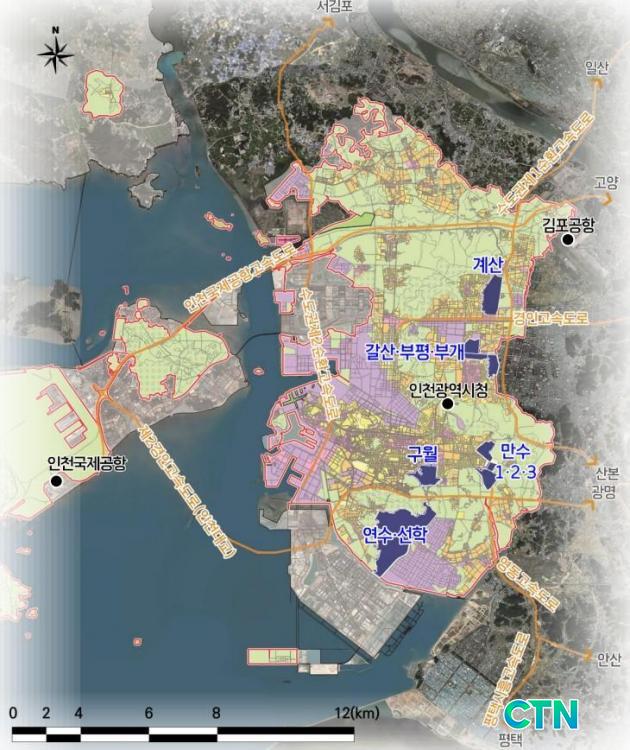
현재 인천시는 구월, 연수·선학, 만수1·2·3, 갈산·부평·부개, 계산지구 등 총 5개 지구를 대상으로 '2035 인천광역시 노후계획도시정비기본계획'을 수립하고 있다. 이번 계획은 단순한 주거환경 정비를 넘어 체계적이고 광역적인 도시 공간 구조 개편을 목표로 하고 있다. 아울러 야간이나 취약 시간대 주민 안전 확보 등 정주 여건 개선을 모니터링하고, 유관 부처 및 자치구와의 협조 체계를 구축해 도내 정비사업 거버넌스의 효율성을 다지겠다는 행정적 포석을 전면에 내세웠다.
인천시는 사업성 향상과 주민 부담 완화를 위해 공공기여 비율도 조정했다. 지난 4월 20일 제정·공포된 조례에 따라 5개 지구의 공공기여 비율을 법적 최소 수준인 1구간 10%, 2구간 41%로 설정했다. 이를 통해 주민 부담을 줄이고 원활한 사업 추진을 유도할 계획이다. 지자체가 완화된 규제 지표를 미디어에 대대적으로 노출하며 가시적인 '적극 행정'의 성과로 상찬하는 이면에는, 개발 이익 환수라는 공공의 목적을 뒤로한 채 대규모 정비에 따른 이주 대책 등 본질적인 갈등 해결을 유예하려는 관료 편의주의적 발상이 도사리고 있다는 지적이 나온다.
또한 주민 이해도를 높이기 위해 시 누리집에 '선도지구 질의응답(FAQ)'를 제작·게시하고, 사업의 전문성과 공정성 확보를 위해 '인천 노후계획도시정비위원회' 구성 등을 추진하는 등 행정 지원에도 속도를 내고 있다. 인천시는 오는 7월 노후계획도시정비위원회 심의를 마친 뒤, 국토교통부 중앙특별위원회 심의를 거쳐 10월 중 기본계획을 최종 고시할 예정이다. 특히 정비사업 추진의 핵심인 '선도지구'는 오는 6월 1일까지 공모 접수를 진행하며, 국토교통부와의 협의를 거쳐 8월 중 최종 선정할 계획이다.
실제로 현장 주민들과 부동산 전문가들이 당면한 본질적인 문제는 공모 지침의 부재나 FAQ 게시 여부가 아니라, 고금리와 공사비 급등에 따른 분담금 현실화 가능성 및 수만 가구가 동시에 움직일 때 발생할 '전세 대란' 대책이다. 지자체가 일차적인 지표 정산과 일정 소화에만 몰두하는 것은 시민 주거 안정 확보라는 당국 본연의 임무에 미치지 못하는 임시방편에 그쳤다는 비판이 지배적이다. 인천시는 연례적인 실적 쌓기식 공모를 지양하고, 실제 도시공학 전문가들과 주민들이 수급 불균형 문제를 상시 점검하고 실질적인 구조 인프라를 직접 조율할 수 있는 '현장 밀착형 상설 방재 및 이주 협의체' 구축 등 시민들이 피부로 느낄 수 있는 인프라 보완에 역량을 집중해야 할 것이다.
[영문번역 기사-AI활용]
Yoo Kwang-jo, Director of the City Balance Bureau of Incheon Metropolitan City, said, "The establishment of this basic plan will be an important turning point to elevate Incheon's urban competitiveness to the next level. We will spare no administrative support so that deteriorated planned cities can successfully transition into sustainable future cities." Incheon Metropolitan City announced that it is fully promoting maintenance projects to improve the residential environment of deteriorated planned cities, such as Guwol and Yeonsu, and to transform them into sustainable future cities. Instead of the government significantly guaranteeing financial investment for expanding the wide-area transportation network or revitalizing the old downtown, it appears to be an approach of taking immediate enforcement of visible guideline preparation and review procedures as a means of promotion.
Currently, Incheon City is establishing the '2035 Incheon Metropolitan City Deteriorated Planned City Reconstruction Basic Plan' targeting a total of five districts, including Guwol, Yeonsu/Seonhak, Mansu 1/2/3, Galsan/Bupyeong/Bugae, and the Gyesan district. This plan aims for a systematic and wide-area reorganization of the urban spatial structure beyond simple residential environment maintenance. In addition, the plan laid forward an administrative posture to solidify the efficiency of the provincial maintenance project governance by monitoring the improvement of residential conditions, such as securing resident safety during night hours or vulnerable times, and establishing a cooperative system with related departments and autonomous districts.
Incheon City also adjusted the public contribution ratio to improve business feasibility and ease the burden on residents. In accordance with the ordinance enacted and promulgated on April 20, the public contribution ratio for the five districts was set at the legal minimum level of 10% for the first section and 41% for the second section. Through this, the city plans to reduce the burden on residents and induce smooth project promotion. Behind the packaging of the local government's relaxed regulatory indexes loudly exposed to the media as a core achievement of 'active administration' lies a complacent bureaucratic convenience attempting to defer the resolution of intrinsic conflicts, such as measures for relocation following large-scale maintenance, while leaving the public purpose of reclaiming development gains behind.
Furthermore, to increase residents' understanding, the city has produced and posted 'Leader District Q&A (FAQ)' on the city website, and is speeding up administrative support by promoting the formation of the 'Incheon Deteriorated Planned City Reconstruction Committee' to ensure professionalism and fairness in the project. Incheon City plans to finally announce the basic plan in October after completing the review by the Deteriorated Planned City Reconstruction Committee in July and passing through the review of the Central Special Committee of the Ministry of Land, Infrastructure and Transport. In particular, the 'Leader District,' which is the core of project promotion, will accept public contest applications until June 1, and the final selection is planned for August through consultation with the Ministry of Land, Infrastructure and Transport.
In reality, the intrinsic problem confronted by frontline residents and real estate experts on-site is not the absence of public contest guidelines or whether an FAQ is posted, but rather the feasibility of expenses due to high interest rates and surging construction costs, and the 'jeonse crisis' that will occur when tens of thousands of households move simultaneously. Focusing solely on primary index calculations and schedule management by gathering at a situation room misses the mark of the competent authority's inherent duty, remaining a mere temporary fix. Incheon City must refrain from performance-accumulating public contests and concentrate its capabilities first on substantializing a 'field-linked permanent disaster prevention and relocation consultation body' where actual urban engineering experts and residents can constantly inspect supply-demand imbalance issues to directly adjust practical structural infrastructures so that citizens can actually feel it.
 |
주대호 기자 wneo9016@naver.com
안녕하세요 :)
초보자들이 쉽게 접하는 물고기들의 사육 정보글을 올리는 주대호 기자 입니다.
|