2026.06.10(수) 14:50
 교육타임즈 지면신문









|
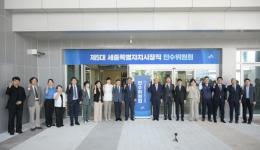
세 기관은 지난 3월 실무조직을 발족한 이후 조직·인사·재정·자치법규 등 8개 세부 분야에서 조율을 진행해 왔다. 이번 조직 개편안에 따라 통합 초기 행정 수요 폭증을 감안해 법령상 기준보다 2개 국을 추가한 기획조정실 및 6개 국 규모의 통합 청사가 한시적으로 운영된다. 또한 양 교육청이 보유한 기존 680여 개의 자치법규를 전수조사해 출범과 동시에 시행되어야 할 140여 개 핵심 조례·규칙을 중심으로 통합안을 마련, 6월 중 입법 절차를 마칠 계획이다. 행정 인프라의 핵심인 나이스(NEIS)와 K-에듀파인은 인프라 여건을 고려해 출범 초기에는 개별 운영하되, 대국민 서비스 창구만 일원화하기로 했다. 교육부는 시스템 수정과 향후 완전 통합 모델 설계를 위해 특별교부금 27억 원을 우선 지원했다.
서로 다른 두 광역 지자체의 교육 행정 조직을 하나로 묶는 역사상 첫 메가 교육청 실험이라는 점에서, 부처 간 칸막이를 허물고 행정 효율성을 극대화하려는 정부와 지자체의 선제적 공조는 지방분권 시대에 걸맞은 진취적인 행정 혁신으로 평가된다. 특히 거대 조직 출범 초기의 혼선을 막기 위해 한시적으로 국 단위 조직을 증설하는 유연성을 발휘하고, 방대한 자치법규 중 시급성을 요하는 조례를 선별해 입법 공백을 최소화하려는 실무적 접근법은 고무적인 대목이다.
하지만 이 같은 물리적 결합이 교육 현장의 실질적인 화학적 융합으로 이어지기까지는 행정 이원화에 따른 마찰과 조율이라는 지난한 숙제를 안고 있다. 핵심 행정망인 나이스와 에듀파인 시스템을 내부 인프라 격차를 이유로 완전히 통합하지 못한 채 임시방편으로 따로 운영하기로 하면서, 출범 초기 일선 교직원들의 업무 혼선과 행정 이중 부담이 불가피할 것이라는 우려가 나온다. 단순히 외형적 기구 편제와 자치법규 정비에만 치중하는 소극적 행정에 머무를 것이 아니라, 완전히 상이했던 광주와 전남의 인사 적체 해소 방안과 지역별 교육 격차 완화 대책을 정밀하게 수립해야 한다. 나아가 특별교부금 투입에 의존하는 단기 보조를 넘어 장기적으로 예산 효율화를 달성할 수 있는 자립형 스마트 교육 재정 플랫폼을 구축하는 등 화학적 결합을 완성할 정교한 후속 로드맵 마련이 풀어야 할 난제다.
[영문번역 기사-AI활용]
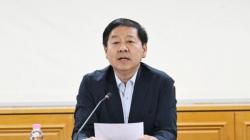
Choe Kyo-jin, Minister of Education, stated, "The launch of the Jeonnam-Gwangju Unified Special City Office of Education will serve as an important turning point for realizing balanced national growth through the '5 Mega-regions & 3 Special administrative zones' strategy and vitalizing educational autonomy. The Ministry of Education will continue to closely communicate and cooperate with the Jeonnam Office of Education and the Gwangju Office of Education, and do our best to support the successful launch of the unified office." The Ministry of Education, together with the Jeonnam Provincial Office of Education and the Gwangju Metropolitan Office of Education, held the 'Educational Administration System Integration Progress Review Meeting' at the Jeonnam Office of Education to conduct a final inspection for the launch of the Jeonnam-Gwangju Unified Special City Office of Education this July. The review meeting was attended by Minister Choe, Superintendent-elect Kim Dae-jung, and deputy superintendents from both regional offices of education.
The three institutions have coordinated in eight detailed areas, including organization, personnel, finance, and local regulations, since launching a working-level preparatory group last March. According to the organizational restructuring plan, a unified office consisting of an office of planning and coordination and six bureaus—two more bureaus than the legally prescribed scale—will be operated temporarily, considering the surge in administrative demand during the initial phase of integration. Furthermore, after a complete investigation of the existing 680 local regulations held by both offices, a unified draft focusing on some 140 core ordinances and rules that need to be implemented immediately upon launch is being pushed forward, with follow-up legislative procedures to be completed within June. NEIS and K-EduFine, the core administrative networks, will be operated individually at launch due to the differing infrastructure conditions of each office, but an integrated portal will be provided for students and parents. The Ministry of Education provided approximately 2.7 billion won in special grants for temporary system modifications and future full-scale system integration planning.
As the historical first mega-office of education experiment that binds the educational administrative organizations of two distinct metropolitan local governments into one, the preemptive cooperation between the government and local authorities to break down institutional silos and maximize administrative efficiency is evaluated as a progressive administrative innovation suitable for the era of local decentralization. In particular, demonstrating flexibility by temporarily expanding bureau-level organizations to prevent confusion during the initial launch of the massive organization, and selecting urgent ordinances among vast local regulations to minimize legislative vacuums, are encouraging aspects.
However, for such a physical combination to lead to a substantial chemical fusion in educational fields, the authorities face a tedious task of handling frictions and adjustments caused by administrative dualism. As the core administrative networks, NEIS and EduFine, could not be completely integrated due to gaps in internal infrastructure and will instead be run separately as a makeshift measure, worries arise that administrative double burdens and confusion among front-line school staff will be unavoidable in the early stages. Rather than remaining confined to passive administration focused merely on outward institutional organization and local regulation alignment, the authorities must meticulously establish plans to resolve personnel backlogs and alleviate educational disparities between the two regions, which were completely different. Moving beyond short-term assistance dependent on special grants, preparing a sophisticated follow-up roadmap to complete a true chemical integration, such as establishing a self-reliant smart educational financial platform that can achieve long-term budgetary efficiency, remains a difficult problem to solve.
 |
가요진 기자 gyj1119@naver.com
|