2026.06.12(금) 11:45
 교육타임즈 지면신문









|
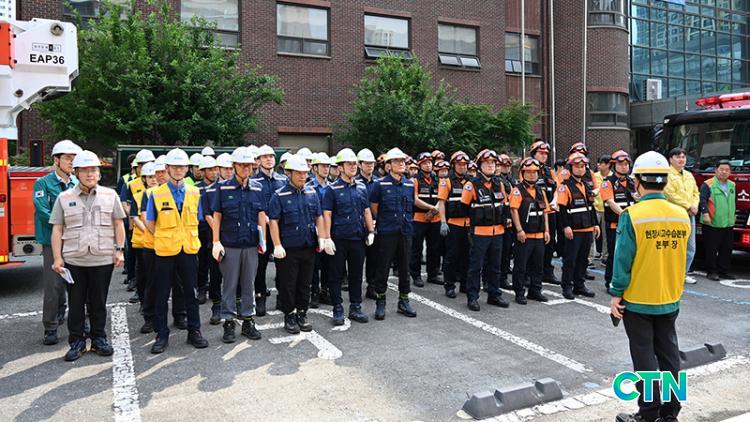
이번 방재 합동 훈련은 월배차량기지 내 교육원 식당 조리실에서 가스 누출로 인한 대형 폭발과 함께 대규모 화재가 연쇄적으로 발생하여 현장에서 사망 1명, 부상 8명 등 총 9명의 중상자가 발생하는 최악의 복합 재난 시나리오를 가정해 전개됐다. 현장에는 각 기관의 정예 방재 인력 총 122명과 고성능 소방·구급·복구 장비 11대가 전격 투입되었으며, 대구교통공사 임직원 70명이 지휘조 및 초동대처조로 직접 참여해 초기 구조 역량과 긴급 응급복구 프로세스를 집중적으로 검증받았다. 구체적인 훈련 절차는 최초 가스 폭발 및 대형 화재 발생 상황 인지와 동시에 이루어진 119 즉시 신고 절차를 시작으로 자위소방대의 초기 인명 구조 및 자체 화재 진압 시도, 공사 지휘부의 비상대응조직 즉각 가동 체계, 소방·경찰 공조를 통한 현장 사고 수습 및 시설물 최종 긴급 복구, 훈련 종합 평가 및 강평 순으로 일사분란하게 이어졌다. 공사 측은 이번 대규모 도심 합동 훈련을 통해 재난관리 책임 기관 간의 핫라인 연계망과 현장 지휘 통제선의 실효성을 종합적으로 모니터링하는 소기의 성과를 거두었다.
이처럼 도시철도 등 다중이용시설을 운영하는 지자체 산하 공기업이 유관 행정기관 및 구조 당국과의 긴밀한 공조를 바탕으로 유기적인 합동 방재 시스템을 다진 것은, 대형 인명 피해로 직결될 수 있는 교통 인프라 내 재난 사고의 골든타임을 사수한다는 측면에서 매우 타당하고 필수적인 조치로 인정받는다. 도심 내 주요 거점에서 장비와 인력을 실제 가동해 매뉴얼의 사각지대를 보완하려 한 행정적 시도 역시 안전 도시 구현을 위한 실무적 행보로 볼 수 있다.
그러나 사전에 조율된 명확한 시나리오와 연출된 동선에 따라 100여 명이 넘는 유관기관 인력과 대형 장비 11대가 자리를 채운 행사를 두고 '불시 훈련'이라는 엄격한 타이틀을 붙이는 것은, 전형적인 '정부 평가용 말장난'이자 행정 편의주의적 생색내기에 불과하다는 현장의 비판 섞인 목소리도 높다. 진짜 예고 없는 돌발 재난이 터졌을 때의 지휘부 부재 상황이나 실시간 통신 두절 등 실전 변수는 배제한 채, 모든 기관이 약속된 시간에 맞춰 출동하는 짜고 치는 각본식 연극을 지속하는 한 실제 재난 시 초동 대처 실패의 악순환을 끊어낼 수 없기 때문이다. 따라서 공사는 보여주기식 대규모 인력 동원 행사를 정기 개최하는 데 안주할 것이 아니라, 실무 현장 근로자들이 매뉴얼 없이도 즉각 소화전과 대피로를 확보할 수 있도록 불시 상황 통보 제도를 무작위로 실효성 있게 전개하고 기관 간 무선 통신망 일원화 등 본질적인 시스템 인프라를 먼저 개혁하는 실질적인 후속 조치를 단행해야만 민생 안전을 보장하는 진정한 방재 기관으로 거듭날 수 있다.
[영문번역 기사-AI활용]
Kim Ki-hyuk, CEO of Daegu Transportation Corporation, stated, "To protect the lives and safety of citizens with the highest priority in the event of a disaster, we are continuously conducting practice-centered training rather than show-style events. We will continue to maintain a close cooperation system with related agencies to do our absolute best in strengthening preemptive disaster response capabilities." Daegu Transportation Corporation announced that it successfully completed a surprise joint disaster prevention training to advance its field response capabilities and strengthen the organic cooperation and coordination system with related administrative authorities against unpredictable complex disasters that have recently been surging socially. The corporation abruptly launched the 'Disaster Preparation Regular Training' without any prior notice on the afternoon of June 10 at the Wolbae Depot in Dalseo-gu, Daegu, with a total of six public institutions and civic organizations participating, including Daegu Metropolitan City, Dalseo-gu Office, Dalseo Fire Station, Dalseo Police Station, and the Dalseo-gu Safety Monitor Volunteer Group.
This joint disaster prevention training was developed based on a worst-case complex disaster scenario where a massive explosion caused by a gas leak in the kitchen of the training center cafeteria inside the Wolbae Depot triggered successive large-scale fires, resulting in a total of nine casualties (1 dead, 8 injured) on-site. A total of 122 elite disaster prevention personnel and 11 high-performance firefighting, rescue, and recovery vehicles from each agency were deployed to the field, and 70 executives and employees of Daegu Transportation Corporation directly participated as the command and initial response teams to intensively verify initial rescue capabilities and emergency recovery processes. The specific training procedures proceeded in an orderly manner, starting with the immediate 119 reporting process made simultaneously with the perception of the initial gas explosion and large-scale fire, followed by the self-defense fire brigade's initial life rescue and self-extinguishing attempts, the corporation leadership's immediate activation of the emergency response organization, on-site accident handling and facility emergency recovery through fire-police coordination, and finally the comprehensive training evaluation and critique. The corporation achieved minor results in comprehensively monitoring the effectiveness of the hotline linkage network and field command control lines among disaster management responsibility agencies through this large-scale urban joint training.
The initiative of a local government-affiliated public enterprise operating public use facilities like urban railroads to establish an organic joint disaster prevention system based on close coordination with related administrative authorities and rescue agencies is recognized as a highly reasonable and essential measure in terms of securing the golden hour for disaster accidents within transportation infrastructures that directly link to massive casualties. The administrative attempt to supplement blind spots in manuals by actually mobilizing equipment and personnel at major nodes within urban areas is also seen as a practical move toward realizing a safe city.
However, labeling an event as a 'surprise training' when more than 100 personnel from related organizations and 11 large vehicles filled the venue according to a pre-arranged explicit scenario and staged movements cannot avoid sharp criticisms from the field as a typical 'rhetoric game for government evaluations' and bureaucratically convenient showmanship. This is because if they continue script-style plays where all organizations dispatch according to promised schedules while excluding actual variables like the absence of leadership or real-time communication disconnections during an unexpected actual disaster, they cannot break the vicious cycle of initial response failures. Therefore, rather than settling for hosting large-scale personnel mobilization events periodically for display, the corporation must practically deploy random surprise situation notification systems so that field workers can secure fire hydrants and evacuation routes immediately even without manuals. Reforming essential system infrastructures first, such as unifying wireless communication networks among agencies, is a substantial task to be reborn as an authentic disaster prevention institution that guarantees public safety.
 |
이수현 기자 leegikook@hanmail.net
|