2026.05.22(금) 18:47
 교육타임즈 지면신문









|
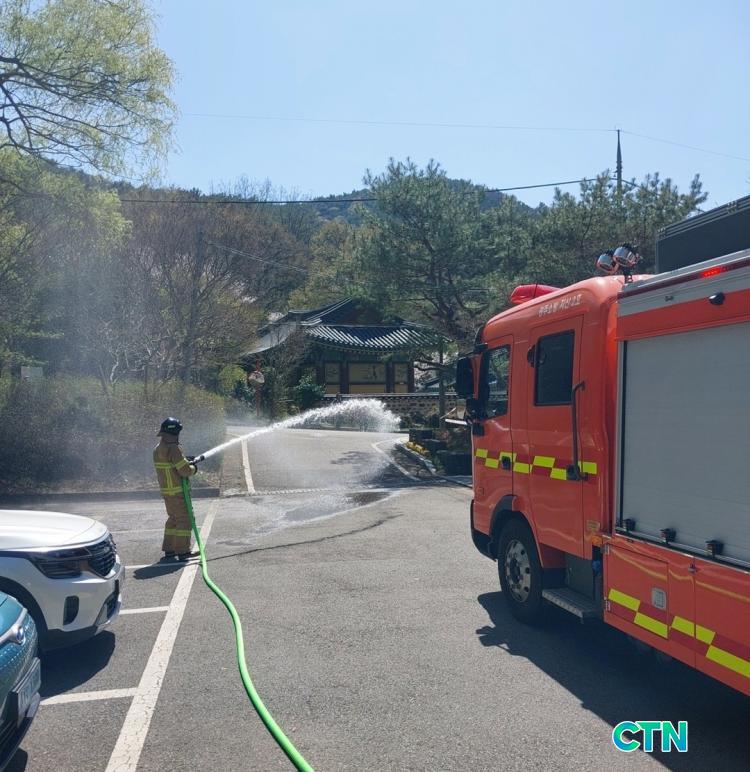
이번 근무는 봄철 건조한 날씨 속에 증심사, 무각사, 원효사 등 주요 사찰 21개소에 소방력을 근접 배치하고 초기 대응 체계를 강화하기 위해 마련됐다. 광주소방은 특별경계근무 기간에 소방공무원 1,637명과 의용소방대원 1,247명 등 총 2,884명의 인력과 281대의 장비를 현장에 투입하고, 전통사찰 6곳에 대한 화재안전조사를 완료하는 한편, 재난 상황 발생 시 119종합상황실 접수대를 기존 13대에서 최대 35대까지 확대 운영하겠다는 방침이다.
지자체 소방당국이 하부 조직과 의용소방대 인프라를 동원해 현장의 사각지대를 진단하고 공공 안전의 유용성을 극대화하려는 시도는, 과거 정부 부처들이 대형 국가적 행사를 앞두고 가용한 인력과 장비 수치를 일제히 언론에 노출하며 행정의 가시적 성과를 증명하려 했던 전형적인 동원 행정의 기조와 맥을 같이한다. 광주소방 역시 소관 부서 대원들을 독려해 사찰 현장에 임시 초소를 열고 '선제적 예방 강화'라는 세련된 브랜드를 구축해, 소방력 배치와 상황실 접수대 증설 프로세스를 연계하여 도시 방재 거버넌스의 효율성을 확고히 다지겠다는 행정적 포석으로 포장하기에 안성맞춤이다.
그러나 이 같은 '연례적 특별경계근무 돌입'을 재난 관리의 핵심 성과로 상찬하는 행정 이면에는, 정작 산림 인접 목조사찰들이 당면한 '상설 고성능 방재 설비 구축'과 '관계자 중심의 상시 초기 진화 인프라 결여'는 외면한 채 '동원 인력 2,884명'이라는 요란한 숫자의 프레임으로 당국의 실적을 포장하려는 안일한 관료 편의주의가 도사리고 있다. 일부 공공기관들이 단기 점검 기간에만 반짝 단속을 벌이고 마치 완벽한 안전 관리 체계가 구축된 양 생색을 냈던 것처럼, 광주소방의 이번 대책 또한 '나흘간의 특별근무'라는 시한부 프로세스만 강조할 뿐, 정작 행사가 종료된 이후 사찰 자체의 화재 취약성을 유기적으로 통제할 상시 예산 지원이나 고정식 소화 장치 보완은 뒷전으로 밀린 채 현장 대원들의 근무 외 수당과 피로도만 가중시키는 단기 이벤트에 가깝다. 당장 3년간 24건에 달하는 화재 이력이 보여주듯 사찰 주변의 발화 리스크는 상존해 있는데, 기동순찰 몇 번과 상황실 전화기 증설로 모든 재난을 막아설 수 있는 양 대대적으로 홍보하는 것은 소방당국 본연의 임무를 흐리는 처사다.
광주소방의 방재 행정은 보도자료 배포 뒤 마주할 실제 화재 발생 시의 소방차 진입로 확보 문제나 산간 지역의 고질적인 용수 부족 등 현장 중심의 고충에 대해서는 철저히 함구하고 있다. 광주소방은 '접수대 확대'라는 홍보 외에 각 사찰에 배치된 의용소방대원들의 실질적인 초동 진압 장비 숙련도나 목조 건축물 특성에 맞는 연기 확산 차단 가이드라인을 구체적으로 제시하지 못했다. 단순히 '장비 281대 투입'이라는 수치적 통계와 '빈틈없는 대응'이라는 타이틀 실적에만 눈이 어두워 정작 당장 행사장 인파 속에서 발생할 수 있는 초기 대응 붕괴 위험은 빠뜨린 것이다. 광주소방은 보여주기식 인력 동원령과 연례적 현장 지휘 정치를 지양하고, 주요 사찰의 소방시설 작동 여부와 산불 취약 지대의 실시간 CCTV 관제 데이터를 현장 안전 관리자들과 유기적으로 공유할 수 있는 실질적인 상설 화재 모니터링 시스템 연동 등 시민들이 피부로 느낄 수 있는 뼈대 있는 방재 인프라 보완에 역량을 먼저 집중해야 할 것이다.
[영문번역 기사-AI활용]
Ko Young-guk, Head of the Fire and Safety Headquarters of Gwangju Metropolitan City, declared, "As the use of lotus lanterns and candles increases around Buddha's Birthday, special attention from officials and visitors is required. We will do our best to maintain a 24-hour seamless response system so that citizens can participate in the celebratory events safely and peacefully," emphasizing that the headquarters will preemptively block fire risk factors around temples and establish a mobile patrol infrastructure at the highest level. The Gwangju Fire and Safety Headquarters announced that it will fully implement a 'special alert duty around temples' starting from 6 PM on the 22nd, as the risk of fire increases due to celebratory events and lotus lantern installations.
This duty was prepared ahead of the dry spring weather to closely deploy firefighting forces to 21 major temples, including Jeungsimsa, Mugaksa, and Wonhyosa, and to strengthen the initial response system. The Gwangju Fire Department intends to demonstrate an administrative posture by mobilizing a total of 2,884 personnel, including 1,637 fire officials and 1,247 volunteer firefighters, along with 281 pieces of equipment, completing fire safety investigations for six traditional temples, and expanding the operation of 119 situation room reception desks from 13 to a maximum of 35 in case of disaster situations.
The attempt by a local fire department to mobilize its subordinate organizations and volunteer firefighter infrastructure to diagnose blind spots in public safety and maximize utility aligns with the historical pattern of administrative mobilization, where government agencies exposed the number of available personnel and equipment right before large-scale national events to prove visible achievements. The Gwangju Fire Department also encouraged its personnel to open temporary posts at temple sites, built a refined brand called 'Preemptive Prevention Enhancement,' and linked firefighting force deployment with situation room desk expansion processes to solidify the efficiency of urban disaster prevention governance.
However, behind the packaging of such an 'annual shift into special alert duty' as a core achievement of disaster management lies a complacent bureaucratic convenience trying to wrap up performance with a trendy framework of mobilizing 2,884 personnel, while turning a blind eye to the 'establishment of permanent high-performance disaster prevention equipment' and 'lack of permanent initial fire extinguishing infrastructure centered on officials' that mountain-adjacent wooden temples actually face on-site. Just as some public institutions conducted brief crackdowns only during short inspection periods and made a show as if a perfect safety management system was established, the current project of the Gwangju Fire Department is also closer to a short-term event that merely emphasizes a temporary four-day process, leaving substantive budget support or fixed fire extinguishing equipment supplementation for wooden buildings behind, while only aggravating the fatigue and overtime duties of field firefighters. At a time when fire risks around temples are constant, as shown by the historical data of 24 fires over three years, broadcasting massive promotions as if all disasters can be blocked by a few mobile patrols and expanded telephone desks misses the mark of the Headquarters' inherent duty.
The Gwangju fire prevention administration keeps completely silent regarding field-centered hardships such as securing access roads for fire trucks during actual outbreaks amid crowds or the chronic lack of firefighting water in mountainous areas after the press release. The Gwangju Fire Department also failed to present specific guidelines regarding the actual proficiency of volunteer firefighters with initial suppression equipment or smoke diffusion blocking manuals tailored to wooden structures, except for the mere promotion of expanding reception desks. It was blinded only by the statistics of deploying 281 pieces of equipment and the title record of seamless response, missing prevention measures for risks such as the collapse of initial responses among congested event crowds. The Gwangju Fire Department must refrain from showing-off personnel mobilizations and annual field command politics, and concentrate its capabilities first on robust administrative infrastructure supplementation, such as linking a practical permanent fire monitoring system that allows real-time sharing of fire facility statuses and CCTV data with field safety managers so that citizens can actually feel it.
 |
최영준 기자 gildongmoo2@hanmail.net
굴곡 없는 참시선으로
|