2026.06.04(목) 13:10
 교육타임즈 지면신문









|
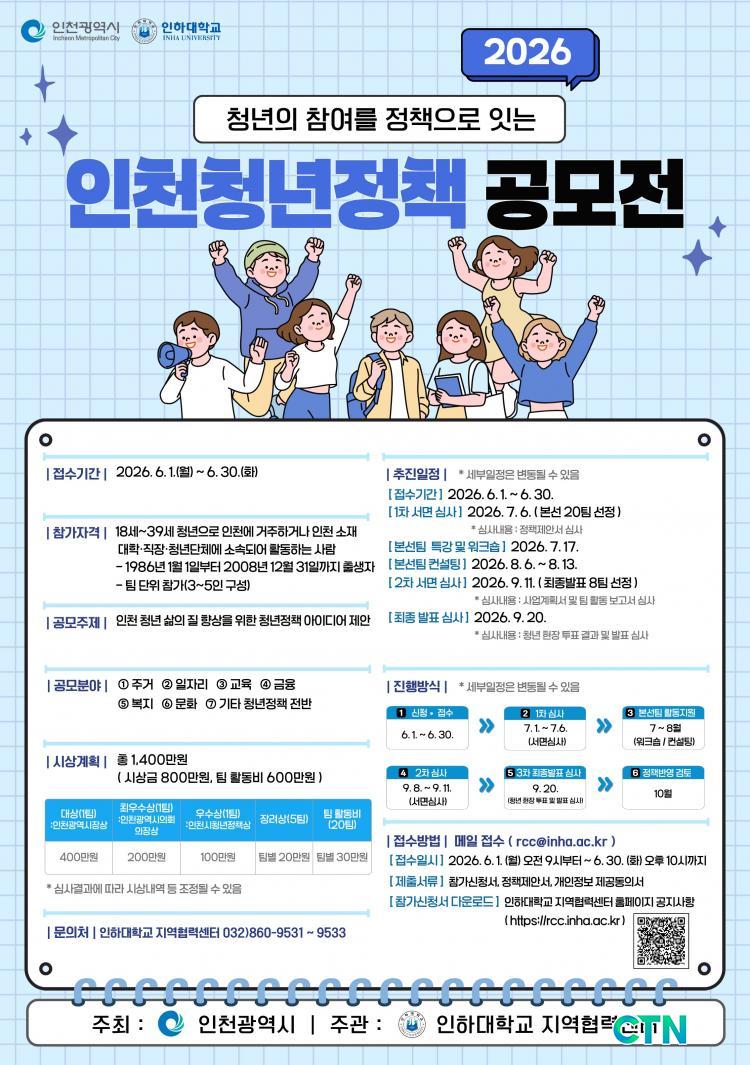
이번 공모전의 가장 큰 맹점은 인천시가 자랑하는 '참신한 아이디어의 정책 발전'이 실제 시정에 반영되어 예산으로 집행되기 어려운 '공모전용 보고서 양산'에 그치고 있다는 점이다. 3단계 심사를 거쳐 올라온 아이디어들이 기존의 공무원 조직 내부의 규제 장벽이나 조례 개정의 한계 부딪혀 서랍 속으로 직행하는 구조적 모순은 고스란히 덮어두고 있다. 진정으로 청년들의 목소리를 시정에 담고자 한다면, 일회성 발표 대회를 열 것이 아니라 청년들이 제안한 예산을 실제 시 예산안에 즉각 반영하는 '청년참여예산제'의 지분을 독립적으로 확충하거나 상설 청년의회를 고도화하는 인프라 다지기가 선행되어야 한다. 이러한 제도적 기반 없이 1차 통과 팀에 고작 30만 원을 쥐여주며 행정적 책임을 다한 것처럼 포장하는 것은 실적 조급증에 걸린 지자체가 흔히 쓰는 전형적인 성과주의 껍데기일 뿐이다.
아울러 최종 발표심사를 9월에 개최되는 '인천청년주간' 행사와 연계해 현장 투표 결과를 반영하겠다는 대목 역시 전형적인 행정 편의주의와 전시 행정의 산물이다. 정책의 실효성과 타당성을 예리하게 검증하기보다, 축제성 행사의 구색을 맞추고 관객 동원용 볼거리를 제공하기 위해 공모전 진출자들을 무대 위 소품으로 활용하겠다는 발상에 가깝다. 청년들의 진지한 지역 문제 고민을 축제성 이벤트의 흥행 카드로 소비하며, 보고서의 부피와 행사 만족도 수치만 늘리려는 관성 행정의 단면만 도드라진다.
청년 실업과 주거 불안이 심화되는 시대에 지자체의 청년 정책은 단순한 아이디어 경진대회 개최나 단기 활동비 살포 위주의 보도자료 정치를 넘어서야 마땅하다. 매년 반복되는 공모전 운영비와 홍보비에 공공 재원을 소진하는 구조로는 청년들의 삶을 근본적으로 구제할 수 없다. 인천시는 청년들의 참여를 치적으로 포장하는 전시 행정을 즉각 중단해야 한다. 그늘진 현장에서 고군분투하는 청년 소상공인과 대학생들이 실질적인 정책 효능감을 누릴 수 있도록 청년 제안 정책의 실제 시정 반영 비율을 의무적으로 공개하는 책임 행정 시스템을 정립해야 한다. 나아가 발굴된 아이디어를 인하대 등 지역 학계·산업계의 상설 연구 과제로 연결해 장기적인 지역 재생 자원으로 고도화하는 정책의 내실화에 행정 역량을 결집할 때 비로소 청년들이 신뢰하는 진정한 소통 행정의 결실을 맺을 것이다.
[영문번역 기사-AI활용]
Kim Se-heon, the city's youth policy officer, stated, "We expect this contest to become a stage for policy participation where young people directly contemplate local community problems and propose solutions. We will actively support young people's innovative ideas so that they can lead to policies that change the future of Incheon." This is a passage emphasizing the department's planning ability and administrative performance, saying it would build tailored countermeasures through expert consulting and establish youth as the main agents of policy rather than mere beneficiaries. The gorgeous blueprints filling the press release, such as constructing a cooperation system with Inha University's Regional Cooperation Center, presenting grand contest fields encompassing housing, jobs, and finance, and supporting 300,000 won in activity fees per team, create an illusion as if Incheon City is leading tremendous innovation for the promotion of youth generations' rights and expansion of participation. However, cutting out the substance such as practical budget formulation and legislative support that participants can practically feel, the practice of trying to package the department's annual event into a grand policy alternative window by hiding behind a one-off prize money of a total of 8 million won is a specimen of typical 'performance packaging exhibition administration.'
The biggest blind spot of this contest is that the 'development of innovative ideas into policies' boasted by Incheon City stops at 'mass-producing reports exclusive for contests' that are difficult to be practically reflected in city administration and executed as budgets. It completely covers up the structural contradiction where ideas coming up through 3-stage screenings hit regulatory barriers or limitations of ordinance amendments inside the existing public official organization and head straight into drawers. If it truly desires to contain the voices of youth in city administration, instead of holding a one-off presentation competition, solid infrastructure construction must precede, such as independently expanding the share of the 'Youth Participatory Budgeting System' that immediately reflects budgets proposed by youth into actual city budget bills or upgrading permanent youth assemblies. Packing administrative responsibility as fulfilled by squeezing a mere 300,000 won to teams passing the primary screening without such institutional foundations is nothing more than a typical performance-oriented shell commonly used by local governments caught in performance anxiety.
In addition, the passage stating that they would reflect field voting results by linking the final presentation screening with the 'Incheon Youth Week' event held in September is also a product of typical administrative convenience and exhibition administration. Rather than sharply verifying the effectiveness and feasibility of policies, it is closer to an idea to utilize contest finalists as stage props to fit the format of a festival-like event and provide attractions for mobilizing audiences. Consuming young people's serious contemplations on local problems as box office cards for festival-like events, only the aspect of inertia administration urgent in inflating report volume and event satisfaction figures stands out.
In an era where youth unemployment and housing instability are deepening, the youth policies of local governments must move beyond press release politics centered on holding simple idea competitions or scattering short-term activity fees. Expending public funds every year on repeated contest operation fees and promotional costs cannot fundamentally relieve the lives of youth. Incheon City must immediately stop exhibition administration promoting youth participation as achievements. It should institutionalize a responsible administration system that mandatorily discloses the actual city administration reflection ratio of youth-proposed policies so that young small business owners and university students struggling in the shaded fields can enjoy practical policy efficacy. Furthermore, only when concentrating administrative capabilities on policy internalizing that links discovered ideas with permanent research tasks of local academia and industry like Inha University to upgrade them into long-term local regeneration resources, it will bear the fruits of true communication administration that youth trust.
 |
주대호 기자 wneo9016@naver.com
안녕하세요 :)
초보자들이 쉽게 접하는 물고기들의 사육 정보글을 올리는 주대호 기자 입니다.
|