2026.06.17(수) 10:50
 교육타임즈 지면신문









|
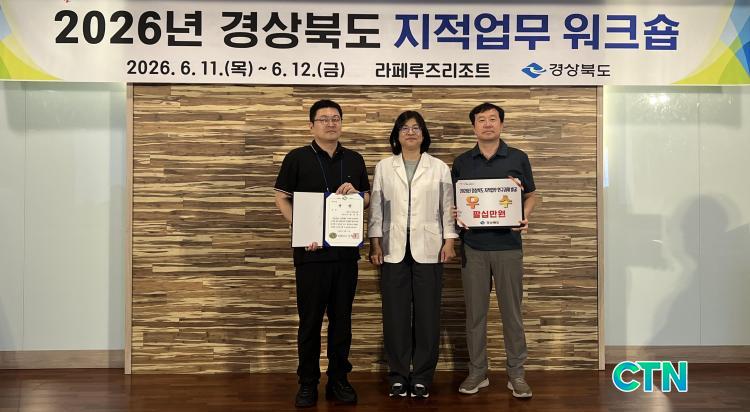
시는 지난 11일부터 12일까지 울릉군 라페루즈 리조트에서 개최된 '2026년 경상북도 지적업무 워크숍 연구과제 발표대회'에서 영천시 지적정보과 홍강의 주무관이 우수상을 수상했다고 지난 16일 발표했다. 경북도 토지정보과 주관으로 열린 이번 워크숍은 도내 22개 시·군 지적 행정 담당 공무원들이 모여 토지 행정 서비스 발전 방안을 모색하는 자리로 마련됐다. 영천시는 1차 서면 심사를 통과한 최종 3개 시·군에 포함돼 본선 발표를 진행했다. 홍 주무관은 'AI 기반 행정구역 경계 불부합지 문제 해결 방안'을 주제로, 실제 현장 도면과 대장이 일치하지 않는 경계 지역의 불부합 문제를 날카롭게 분석했다. 특히 드론 비행 체계와 라이다(LiDAR), AI 영상분석 기술을 융합해 지적불부합지를 자동으로 탐지하고 정비하는 구체적인 프로세스를 제시해 지적 행정의 디지털 전환을 앞당겼다는 호평을 받았다. 이로써 영천시는 지난해 장려상에 이어 올해 우수상까지 거머쥐며 지적 연구 분야에서 2년 연속 수상의 영예를 안았다.
지자체가 행정구역 경계면에서 발생하는 주민 간의 토지 경계 갈등을 단순히 전통적인 지적 측량 방식에 의존하지 않고, AI 영상 분석과 라이다 등 4차 산업혁명 핵심 기술을 선제적으로 결합해 자동 탐지 모델을 구축한 시도는 고도화된 공간정보 행정 사례로 풀이된다. 특히 인접 지자체 간의 공동관리 체계 구축과 지적재조사사업 우선 추진이라는 실무적 대안을 정무적으로 제안해 경북 도내 지적 행정의 표준 가이드라인을 제시한 대목은 영천시의 우수한 행정 기획력이 반영된 결과다.
그러나 일각에서는 이러한 첨단 기술 기반의 연구 성과가 대외적인 수상 실적이나 일회성 발표 축제에 머무르지 않기 위해서는, 실제 타 지자체와의 경계 분쟁 발생 시 사후적으로 법적 효력을 발휘할 수 있는 '행정적·실무적 제도화 룰(포스트 가이드라인)'이 철저하게 수반되어야 한다는 지적이 나온다. 아무리 AI와 드론으로 정확한 경계를 도출하더라도, 정작 인접 지자체 간의 이해관계가 사후적으로 충돌할 경우 이를 강제할 법적 구속력이 없다면 결국 예산만 낭비한 기술 전시 행정으로 전락할 위험이 크기 때문이다. 이에 따라 영천시는 이번 워크숍 종료 이후 경북도 및 인접 지자체와 연계해 '사후 지적 경계 공동 심의위원회'를 상설화해야 하며, 도출된 AI 분석 데이터를 실제 지적공부에 실시간으로 환류하는 후속 실무 보완책을 단행해야 한다. 이러한 유기적인 사후 순환 행정이 뒷받침될 때 비로소 첨단 기술 도입을 위한 예산 투입이 단발성 연구 발표를 넘어 시민들의 재산권을 항구적으로 보호하는 실질적인 국익으로 치환될 수 있을 것이다.
[영문번역 기사-AI활용]
Gu Gyeong-seung, Chief of the Cadastral Information Division of Yeongcheon City, stated, "This research is a meaningful achievement that confirmed the possibility of practically resolving boundary issues between regions by utilizing AI-based technology. We will continue to make efforts to provide more accurate land administration services to citizens by increasing the reliability and efficiency of cadastral administration." Yeongcheon City has achieved external results by presenting a digital cadastral administration model that combines artificial intelligence (AI) and advanced drone technology to resolve long-standing land disputes occurring at the administrative boundaries between adjacent local governments.
The city announced on the 16th that Han Hong-gang, a competent official of the Cadastral Information Division of Yeongcheon City, won the Excellence Award at the '2026 Gyeongsangbuk-do Cadastral Business Workshop Research Project Presentation Competition' held at Laperouse Resort in Ulleung-gun from the 11th to the 12th. The workshop, hosted by the Land Information Division of Gyeongsangbuk-do, was organized as a place for cadastral administration officials from 22 cities and counties in the province to gather and seek ways to develop land administration services. Yeongcheon City was included in the final three cities and counties that passed the first document screening and proceeded with the main presentation. Official Hong sharply analyzed the non-coincidence problem in boundary areas where real field blueprints and registers do not match, under the theme of 'AI-based Administrative District Boundary Non-coincidence Resolution Measures.' In particular, he received high praise for accelerating the digital transformation of cadastral administration by presenting a specific process for automatically detecting and rearranging cadastral non-coincidence areas by fusing drone flight systems, LiDAR, and AI image analysis technologies. As a result, Yeongcheon City won the Excellence Award this year following the Encouragement Award last year, honoring the glory of winning awards for two consecutive years in the field of cadastral research.
The move where the local government did not simply rely on traditional cadastral surveying methods to resolve land boundary conflicts among residents occurring at the boundaries of administrative districts, but instead preemptively combined core technologies of the 4th Industrial Revolution such as AI image analysis and LiDAR to build an automatic detection model, is interpreted as an advanced spatial information administration case. In particular, politically proposing the establishment of a joint management system between adjacent local governments and the preferential promotion of cadastral resurvey projects highlights Yeongcheon City's excellent administrative planning power, which presented standard guidelines for cadastral administration in Gyeongsangbuk-do.
핵심 비판은, critics point out that for these technology-based research achievements to avoid staying at external award performance or short-term presentation festivals, 'administrative and practical institutionalized rules (post-guidelines)' capable of exerting legal force in a post-manner during real boundary disputes with other local governments must be thoroughly accompanied. This is because no matter how accurate boundaries are derived with AI and drones, if there is no legal binding force to compel them when the interests of adjacent local governments conflict in a post-manner, there is a high risk of degenerating into technical exhibition administrations that waste budgets. Accordingly, Yeongcheon City must permanentize a 'post-cadastral boundary joint deliberation committee' in connection with Gyeongsangbuk-do and adjacent local governments after this workshop ends, and implement follow-up practical supplementations that return the derived AI analysis data to the actual cadastral books in real-time. Only when this organic post-distribution feedback mechanism is supported will budget investments for introducing advanced technologies be translated into substantial national interests of permanently protecting citizens' property rights rather than stopping at short-term research presentations.
 |
이수현 기자 leegikook@hanmail.net
|