2026.06.17(수) 10:40
 교육타임즈 지면신문









|
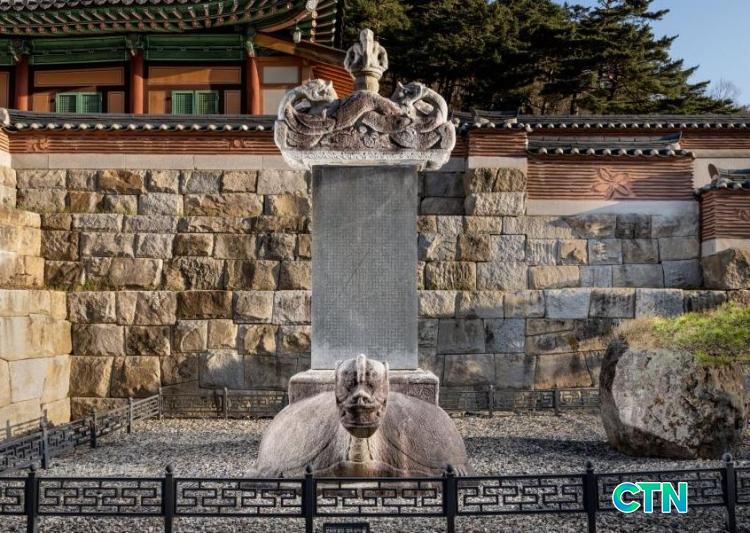
문화유산보존과학센터는 보물 "강릉 보현사 낭원대사탑비"의 안전한 장기 보존·관리를 위해 전면 해체 후 보존처리에 착수한다고 지난 16일 발표했다. 통일신라 말 승려 낭원대사의 행적을 기록한 고유 문화유산인 낭원대사탑비는 지난 2023년 12월 중순 대관령 인근의 급격한 한파로 인해 비신 내부 수분이 얼어 붙어 팽창하는 동결파손을 입었다. 당시 이틀 사이에 기온이 10도 이상 급강하하면서 탑비 내부에 X자형 관통균열이 확대되고 신규 균열이 추가로 발생하는 등 구조적 취약성이 한계에 달했다. 센터 측이 연 2회 정기조사와 모니터링을 실시한 결과 균열 폭이 지속적으로 확대되는 등 위험 수위에 이르자 결국 'E등급(수리 필요)' 판정이 내려졌으며, 환경 제어가 가능한 실내 보존처리를 위해 대전 센터로의 이송이 전격 결정됐다. 해체 작업은 16일부터 이수, 비신, 귀부 전체 부재를 대상으로 진행 중이며, 특히 균열이 심한 비신은 전용 프레임과 가압조절장치를 적용한 맞춤형 해체틀을 사용해 안전을 확보했다. 해체된 부재는 오는 18일 대전 국립문화유산연구원으로 이송되어 2028년까지 3년간 3D 스캐닝과 반사율변환이미징(RTI) 조사 등 AI 기반 열화 예측·진단 연구와 체계적인 보존처리를 거친 뒤 원위치인 보현사에 재복원될 예정이다.
정부 당국이 한파와 결빙 등 기후 위기로 파손된 핵심 석조 문화유산를 과학적으로 진단하기 위해 첨단 디지털 기술과 AI 예측 모델을 정무적으로 도입하고, 현장 환경의 한계를 극복하고자 실내 정밀 보존처리 시스템을 전격 가동한 시도는 국보급 문화유산 수명 연장 측면에서 실효성 높은 행정 사례로 풀이된다. 특히 과거 지광국사탑(2024년)과 화엄사 석등(2025년)의 복원을 성공적으로 완수한 실무 경험을 바탕으로 맞춤형 가압 해체틀을 정무적으로 설계해 2차 파손 위험을 선제 차단하려 한 대목은 센터의 노련한 문화유산 보존 기획력이 반영된 결과다.
그러나 일각에서는 이러한 해체 보존 정책이 이미 2023년 겨울에 발생한 동파 피해를 제때 방어하지 못해 균열이 E등급까지 악화될 때까지 현장 방치해 오다가 뒤늦게 예산을 투입해 기후변화 핑계를 대며 대전으로 옮겨가는 전형적인 뒷북 행정이라는 지적도 나온다. 첨단 AI 진단이라는 거창한 명분을 내세웠더라도, 정작 해체 이송 직후 복원까지 무려 3년이라는 긴 시간 동안 지역 문화유산 공급 공백이 사후적으로 발생하는 데다, 야외에 노출된 전국 수천 개의 석조 문화재에 대한 실무적인 동파 방지 보호막 설치나 상설 보온 대책 등 근본적인 예방 인프라 구축이 전사적으로 동반되지 않는다면 일회성 복원 이벤트 직후 또 다른 지방 문화유산들이 먹통이 될 위험이 크기 때문이다. 이에 따라 이번 이송식 종료 이후에도 전국 석조 문화유산의 동결 적체 현상을 근본적으로 차단할 수 있도록 상설 기후 위험 감시망을 강화하고 현장 밀착형 상시 방재 레이어를 고도화하는 실무 상설 관리망 등 보완책 마련이 시급해 보인다.
[영문번역 기사-AI활용]
Jeong So-young, Director of the Cultural Heritage Conservation Science Center of the National Research Institute of Cultural Heritage under the Cultural Heritage Administration, stated, "Through this project, we expect to secure the structural stability of the damaged Nangwon Daesa Topbi, while also contributing to responding to the damage of stone cultural heritages due to climate change and establishing conservation management standards. The Cultural Heritage Conservation Science Center will continue to perform stone cultural heritage conservation treatments that require high-level skills, continuing active administration so that precious cultural heritages can be safely preserved." The government cultural heritage audit authority has entered into a full-scale dismantling and relocation conservation administration to resolve structural defects in national treasure and treasure-class stone cultural properties facing collapse risks due to rapid freezing damage caused by climate change.
The Cultural Heritage Conservation Science Center announced on the 17th that it will commence conservation treatment after full dismantling for the safe long-term preservation and management of Treasure "Nangwon Daesa Topbi at Bohyeonsa Temple, Gangneung." The Nangwon Daesa Topbi, a unique cultural heritage recording the achievements of the Buddhist monk Nangwon Daesa during the late Unified Silla period, suffered freezing damage in mid-December 2023 when moisture inside the bishin (monolith) froze and expanded due to a sudden cold wave in the Gangneung Bohyeonsa area near Daegwallyeong. At that time, as the temperature plummeted by more than 10 degrees within two days, X-shaped penetrating cracks expanded inside the monument and new cracks additionally occurred, pushing its structural vulnerability to the limit. As a result of the center's bi-annual regular inspections and monitoring showing that the crack width continuously expanded to a critical level, an 'E-grade (repair required)' rating was eventually issued, and a relocation to the Daejeon Center was completely decided for indoor conservation treatment where precise environmental control is possible. Dismantling work has been underway since the 16th targeting all components including the isu, bishin, and gvbu, and in particular, the bishin, which has severe cracks, secured safety by using a tailored dismantling frame applying a dedicated frame and a pressure control device. The dismantled members will be relocated to the National Research Institute of Cultural Heritage in Daejeon on the 18th to undergo AI-based degradation prediction and diagnosis research such as 3D scanning and Reflectance Transformation Imaging (RTI) investigation for three years until 2028, and then will be re-restored to its original location at Bohyeonsa Temple.
The move where the government authority politically introduced advanced digital technologies and AI prediction models to scientifically diagnose core stone cultural assets damaged by cold waves and freezing, and completely activated an indoor precise conservation treatment system to overcome the limitations of the on-site environment, is interpreted as a highly effective administrative case in terms of extending the lifespan of national treasure-class cultural assets. In particular, based on the practical experience of successfully completing the restoration of the Jigwang Daesatap at Beopcheonji Site, Wonju (2024) and the Stone Lantern in Front of Gakhwangjeon at Hwaeomsa Temple, Gurye (2025), politically designing a tailored pressure-controlled dismantling frame to preemptively block secondary damage risks highlights the reflection of the Center's sophisticated cultural asset conservation planning power.
However, some critics point out that these dismantling and conservation policies merely stop at a typical post-mortem reactive administration that failed to timely defend against the freezing damage that occurred in the winter of 2023, leaving it neglected on-site until the cracks worsened to an E-grade, and only later injecting budgets to move it to Daejeon while blaming climate change. Even if they put forward the grandiose justification of advanced AI diagnosis, a local cultural asset supply gap occurs in a post-manner for a long period of up to three years until restoration right after dismantling and relocation, and if the structural body improvements such as installing practical freeze-prevention protective shields or permanent insulation measures for thousands of stone cultural properties exposed outdoors nationwide are not driven across the entire organization, there is a high risk that other local cultural assets will become defective in a post-manner right after a one-off restoration event. growth. Accordingly, voices are gaining ground calling for urgent follow-up supplementary measures, such as a practical permanent management network, to strengthen the permanent climate risk surveillance web so that the freezing accumulation phenomenon of stone cultural assets nationwide can be fundamentally blocked even after this relocation ceremony ends, and to elaborate an on-site close-type permanent disaster prevention layer.
 |
가요진 기자 gyj1119@naver.com
|