2026.06.12(금) 10:32
 교육타임즈 지면신문









|
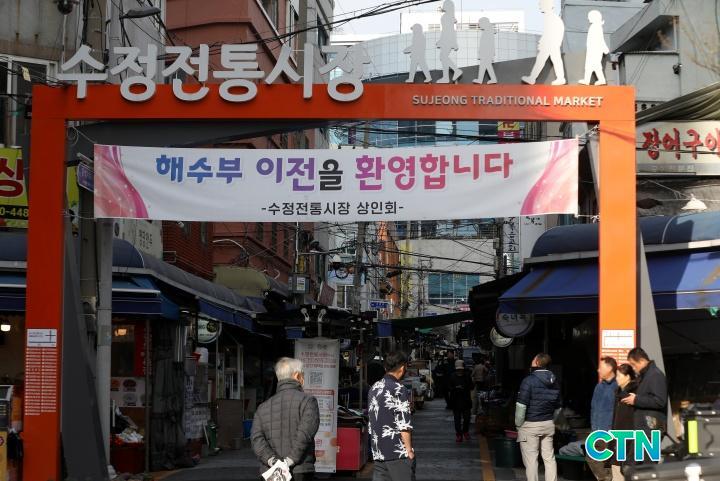
이번 현장 방문은 지역 생활권 중심의 전통시장을 청사 인근에서부터 직접 찾아 현업에 종사하는 상인들의 목소리를 듣고 민생 소통을 강화하는 동시에, 최근 중동 지역의 지정학적 리스크 장기화로 가중된 물가 상승 우려 속에서 수산물 가격 추이를 면밀히 모니터링하기 위해 기획됐다. 해수부가 주관하는 이번 온누리상품권 환급행사는 6월 10일부터 14일까지 5일간 전국 252개 전통시장에서 동시에 진행된다. 황 장관은 이날 시장 내 수산물 점포들을 차례로 돌아보며 산지 조달 여건과 소매 가격 동향을 점검하고 상인들의 애로사항을 청취했다. 이어 온누리상품권으로 수산물을 직접 구매한 뒤 환급 부스를 찾아 절차를 밟으며 소비자가 체감하는 이용 편의성과 행정 지원 실태를 확인했다.
정부 고위 공직자가 직접 물가 관리의 최전선인 전통시장을 찾아 민생 동향을 점검하고, 온누리상품권을 매개로 한 소비 진작책의 실효성을 직접 검증한 것은 서민 경제 안정 측면에서 바람직한 행정적 행보로 평가된다. 특히 공급망 교란 우려가 상존하는 거시경제 환경 속에서 민간의 소비 여력을 뒷받침할 수 있는 직접 정산형 환급 제도를 전국 단위로 촘촘히 전개한 점은 단기적인 시장 활성화에 기여할 것으로 보인다.
그러나 이러한 한시적 상품권 환급 조치가 선거철이나 정세 불안 시기마다 반복되는 단발성 처방에 그칠 경우, 전통시장 수산물 유통 구조의 근본적인 체질 개선을 이끌어내기 어렵다는 지적이 전문가들 사이에서 꾸준히 제기되고 있다. 국비 재원을 투입해 소비 대금을 사후에 보전해 주는 방식은 행사 기간이 끝나면 집객 효과가 급격히 가라앉는 한계가 명확하며, 유통 단계의 비효율로 인한 고질적인 중간 마진 거품을 제거하지 못하기 때문이다. 해양수산부는 단순히 일정 기간 상품권 환급 규모를 늘리는 1차원적 지원을 넘어, 산지 위판장부터 최종 소비지까지의 복잡한 유통 경로를 디지털화하고 직거래 비중을 획기적으로 넓히는 유통 구조 혁신 방안을 조속히 정착시켜야 한다. 나아가 정부 비축 물량의 적기 방출 시스템을 상설화해 외부 충격에 흔들리지 않는 가격 안전망을 구축해야만 서민들이 신뢰할 수 있는 실질적인 먹거리 물가 안정을 달성할 수 있을 것이다.
[영문번역 기사-AI활용]
Hwang Jong-woo, Minister of Oceans and Fisheries, stated, "Stabilizing food prices is a crucial task directly linked to public livelihood. To ensure price stabilization effects that citizens can practically feel, we will continuously promote measures like the Onnuri Gift Certificate payback event and do our utmost in managing the supply and demand of marine products." The Ministry of Oceans and Fisheries announced that Minister Hwang visited the Sujeong Traditional Market near the ministry headquarters on the morning of June 11 to examine the supply and price trends of major public-favored fish types like mackerel and hairtail, and inspected the operational status of the Onnuri Gift Certificate payback event.
The site visit was designed to directly look into traditional markets closely connected to local living zones, listen to the voices of merchants on the ground, and strengthen communication with local commercial districts, while inspecting the supply and demand status of marine products amid rising inflation worries caused by the recent instability in the Middle East. The Onnuri Gift Certificate payback event hosted by the ministry runs from June 10 to 14 at 252 markets nationwide. Minister Hwang toured marine product shops in the market to check the regional procurement conditions and retail price trends, and directly conversed with merchants to listen to field opinions. He then purchased marine products using an Onnuri Gift Certificate and participated in the payback process to verify consumer convenience and the actual operational status of the administrative booth.
The high-ranking government official directly visiting a traditional market, the front line of price management, to examine public livelihood trends and verify the effectiveness of consumption-boosting policies through gift certificates is evaluated as a desirable administrative step in terms of stabilizing the working-class economy. In particular, deploying a direct-settlement payback system nationwide to support private consumption capacity amid macroeconomic environments with persistent supply chain disruption risks is expected to contribute to short-term market vitalization.
However, critics and experts point out that if such temporary gift certificate payback measures remain as one-off prescriptions repeated during election seasons or periods of geopolitical instability, it will be difficult to derive structural improvements in the traditional market's marine product distribution framework. The method of backing consumption costs using national budget resources has a clear limit, as the crowd-gathering effect sharply drops once the event period ends, and it fails to eliminate the chronic middleman margin bubble caused by inefficient distribution steps. The Ministry of Oceans and Fisheries must look beyond one-dimensional support that merely increases the scale of gift certificate paybacks during certain periods, and promptly settle distribution structure innovations that digitalize complex channels from local fish markets to final consumption destinations while drastically widening the proportion of direct transactions. Furthermore, only when the ministry establishes a permanent system for timely releasing government stockpiles to build a price safety net robust against external shocks will it be able to achieve substantial food price stability that citizens can trust.
 |
가요진 기자 gyj1119@naver.com
|